0%

Table of Contents

Reinforced fiberglass mesh is rapidly becoming an indispensable material across a diverse range of industries, from construction and automotive to marine and aerospace. Its unique combination of high strength, lightweight properties, and resistance to corrosion makes it a superior alternative to traditional materials like steel and aluminum in numerous applications. The global demand for efficient, durable, and sustainable materials is driving the growth of the reinforced fiberglass mesh market, leading to continuous innovation in its production and applications.

The increasing need for lightweighting in transportation, coupled with the growing demand for corrosion-resistant materials in infrastructure projects, are key factors propelling the widespread adoption of reinforced fiberglass mesh. The versatility of this material allows for the creation of complex shapes and designs, offering engineers and designers greater flexibility. Furthermore, its relatively low cost compared to other high-performance materials contributes to its increasing popularity.

Understanding the properties, applications, and future trends of reinforced fiberglass mesh is crucial for professionals across various sectors. This knowledge empowers informed decision-making, enabling the selection of optimal materials for specific projects and contributing to the development of innovative and sustainable solutions. The material is poised to play an increasingly important role in addressing global challenges related to infrastructure, transportation, and environmental sustainability.
The Expanding Applications and Benefits of Reinforced Fiberglass Mesh Materials

Introduction to Reinforced Fiberglass Mesh
The Expanding Applications and Benefits of Reinforced Fiberglass Mesh Materials

Reinforced fiberglass mesh isn’t merely a material; it’s a versatile solution engineered to address a spectrum of challenges across various industries. The integration of fiberglass strands with reinforcing materials – often including polymers and resins – creates a composite boasting exceptional strength-to-weight ratio and durability. This unique composition makes it invaluable in situations demanding both resilience and reduced weight.

The production of reinforced fiberglass mesh isn’t a new development, but its applications are constantly expanding thanks to ongoing research and innovations in material science. Its adaptability allows for customization in weave patterns, resin types, and fiberglass densities, tailoring the material's properties to suit specific project needs.

Global Relevance and Industry Context

The global construction industry, valued at over $13 trillion as of 2023 (according to Statista), is a major driver for reinforced fiberglass mesh demand. The need for durable, corrosion-resistant materials in infrastructure projects – particularly in coastal areas and regions prone to harsh weather – fuels the adoption of this composite. Furthermore, the United Nations estimates that over 60% of the world’s population will live in urban areas by 2030, necessitating rapid construction and infrastructure development, making materials like reinforced fiberglass mesh essential.

Beyond construction, the automotive industry is increasingly using reinforced fiberglass mesh to reduce vehicle weight, improving fuel efficiency and lowering emissions. The aerospace sector relies on its lightweight and high-strength properties for aircraft components. Even in niche areas like marine applications – boat hulls, decks, and other structural parts – reinforced fiberglass mesh provides crucial resistance to saltwater corrosion.

A significant challenge the industry faces is ensuring sustainable production practices. The sourcing of raw materials and the end-of-life disposal of fiberglass composites are areas requiring focused attention. Adopting circular economy principles – recycling and repurposing materials – will be critical to minimize the environmental impact of reinforced fiberglass mesh production and usage.

Defining Reinforced Fiberglass Mesh

Reinforced fiberglass mesh is a composite material formed by weaving or arranging fiberglass strands into a mesh-like structure and then embedding them in a resin matrix. The fiberglass provides the tensile strength, while the resin binds the fibers together and protects them from environmental damage. This combination results in a material that is strong, lightweight, durable, and resistant to corrosion and chemicals.

Its connection to modern industry and humanitarian needs is profound. In construction, it serves as reinforcement in concrete, enhancing structural integrity and reducing cracking. In disaster relief, it’s incorporated into rapidly deployable shelters and temporary housing solutions, providing safe and reliable shelter for displaced populations. The versatility of this material makes it a key component in addressing both infrastructure development and emergency response.

Unlike traditional materials like steel, reinforced fiberglass mesh does not rust or corrode, making it ideal for applications in harsh environments. The material's flexibility allows it to conform to complex shapes, reducing material waste and improving design options. It's a prime example of how materials science is driving innovation across multiple sectors, offering both functional and economic benefits.

Key Factors and Core Components

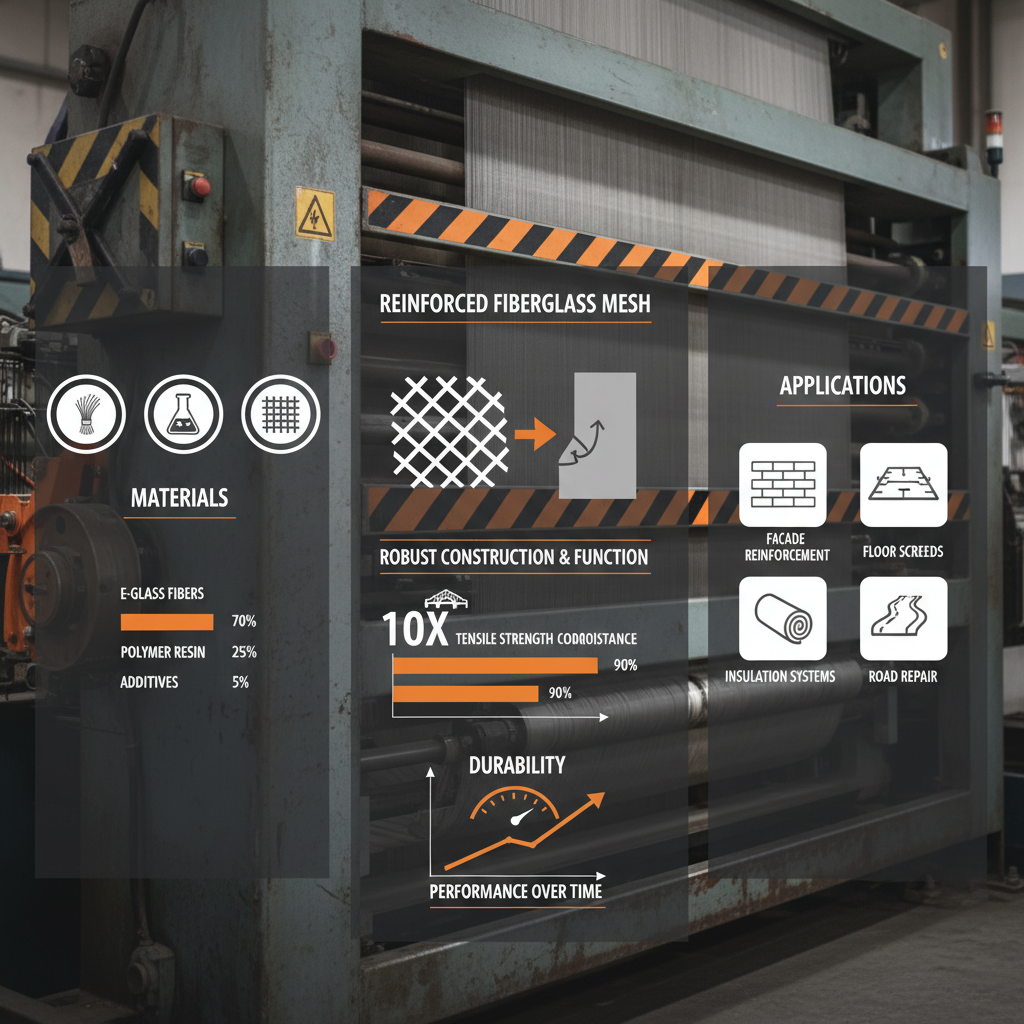
Durability: Reinforced fiberglass mesh exhibits exceptional resistance to weathering, corrosion, and impact, ensuring long-term performance even in harsh environments. This longevity translates into reduced maintenance costs and extended lifespan for structures and products utilizing this material.

Lightweight Properties: Its low density, significantly less than steel or aluminum, reduces overall weight without compromising strength. This is particularly crucial in applications where weight reduction is paramount, such as aerospace and automotive industries.

Reinforced Fiberglass Mesh Performance Metrics


Global Applications and Use Cases

In post-disaster relief operations, reinforced fiberglass mesh is utilized in the rapid construction of temporary shelters, providing a safe and stable environment for affected communities. Its lightweight nature facilitates easy transportation and installation, while its durability ensures the shelter can withstand challenging conditions.

Within the automotive industry, reinforced fiberglass mesh components are becoming increasingly prevalent in body panels, bumpers, and interior parts. This reduces vehicle weight, leading to improved fuel efficiency and lower emissions. In remote industrial zones, it’s used in the construction of corrosion-resistant storage tanks and pipelines, vital for industries like oil and gas, mining, and chemical processing.

Furthermore, in the marine sector, reinforced fiberglass mesh is widely used in the construction of boat hulls, decks, and other structural components, offering exceptional resistance to saltwater corrosion and providing a durable, lightweight structure. The material is also experiencing increased use in wind turbine blades, contributing to the efficiency and longevity of renewable energy infrastructure.

Advantages and Long-Term Value

The cost-effectiveness of reinforced fiberglass mesh, especially when considering its long lifespan and reduced maintenance requirements, presents a significant advantage over traditional materials. Its sustainability profile is enhanced by its durability, reducing the need for frequent replacements. From a social impact perspective, its use in disaster relief and affordable housing contributes to improved living conditions and increased community resilience.

The inherent safety of reinforced fiberglass mesh—non-conductive and non-flammable—enhances its appeal in various applications. Its innovative properties inspire trust among engineers, architects, and designers, leading to the creation of cutting-edge solutions. The long-term value is not simply economic; it is also rooted in the reliability and peace of mind provided by a robust and durable material.

Future Trends and Innovations

The development of bio-based resins for reinforced fiberglass mesh production is a key trend towards greater sustainability. These resins, derived from renewable sources, reduce reliance on fossil fuels and minimize the environmental impact of the manufacturing process. Digital transformation and automation are also streamlining production, improving quality control, and lowering costs.

Researchers are exploring the integration of nanotechnology into reinforced fiberglass mesh to further enhance its strength, durability, and resistance to environmental factors. Furthermore, advancements in recycling technologies are paving the way for closed-loop systems, where end-of-life composites can be broken down and reused in new products. These innovations will unlock new applications and solidify reinforced fiberglass mesh’s role in a more sustainable future.

FAQS

What are the main advantages of using reinforced fiberglass mesh in construction compared to traditional steel reinforcement?

Reinforced fiberglass mesh offers significant advantages over steel in construction. Primarily, it's non-corrosive, eliminating the risk of rust and extending the structure's lifespan, especially in harsh environments. It’s also significantly lighter than steel, reducing transportation costs and simplifying installation. Furthermore, its flexibility allows it to conform to complex shapes, minimizing material waste and facilitating innovative designs. Finally, its lower thermal conductivity can improve energy efficiency.

How does the cost of reinforced fiberglass mesh compare to other building materials over its lifecycle?

While the initial cost of reinforced fiberglass mesh might be slightly higher than steel in some cases, its lifecycle cost is often lower. This is due to its exceptional durability, reduced maintenance requirements, and resistance to corrosion. These factors minimize the need for repairs and replacements over time, ultimately leading to significant cost savings. Its lightweight nature also contributes to reduced transportation and installation expenses.

Is reinforced fiberglass mesh environmentally friendly, and can it be recycled?

Reinforced fiberglass mesh offers environmental benefits compared to traditional materials like steel. Its longer lifespan reduces the demand for raw material extraction and manufacturing. While recycling fiberglass composites is challenging, significant progress is being made in developing effective recycling technologies, including chemical and thermal processes. The industry is also exploring the use of bio-based resins to further enhance its sustainability.

What are the typical applications of reinforced fiberglass mesh in automotive manufacturing?

Reinforced fiberglass mesh is widely used in automotive manufacturing for components like body panels, bumpers, door panels, and interior parts. Its lightweight properties contribute to improved fuel efficiency and reduced emissions. It also provides excellent impact resistance and design flexibility, allowing for the creation of aerodynamic and aesthetically pleasing vehicle designs. Its corrosion resistance also makes it ideal for parts exposed to the elements.

What are the key considerations when designing with reinforced fiberglass mesh versus traditional materials?

When designing with reinforced fiberglass mesh, it's crucial to understand its anisotropic properties – its strength varies depending on the direction of the fibers. Designers need to carefully consider the orientation of the fibers to maximize structural performance. Additionally, the material's behavior under different loading conditions, such as tensile, compressive, and shear forces, should be thoroughly analyzed. Proper bonding with other materials is also critical for ensuring structural integrity.

What standards and certifications are relevant for reinforced fiberglass mesh used in construction?

Several standards and certifications are relevant for reinforced fiberglass mesh used in construction. These include ISO standards relating to material properties and testing methods. National building codes often specify performance requirements for reinforcing materials, which must be met by reinforced fiberglass mesh products. Certifications from independent testing organizations verify that the material meets specific quality and safety standards. Adherence to these standards is essential for ensuring structural integrity and compliance.

Conclusion

Reinforced fiberglass mesh represents a significant advancement in materials science, offering a compelling combination of strength, durability, lightweight properties, and corrosion resistance. Its diverse applications across industries—from construction and automotive to aerospace and marine—underscore its versatility and importance in addressing contemporary challenges related to infrastructure, sustainability, and performance. The adoption of reinforced fiberglass mesh is not merely a material substitution; it's a pathway towards more efficient, resilient, and environmentally responsible solutions.

Looking ahead, continued innovation in bio-based resins, recycling technologies, and nanotechnology will further enhance the sustainability and performance of this remarkable material. Embracing these advancements and fostering collaboration between researchers, manufacturers, and end-users will unlock its full potential, solidifying reinforced fiberglass mesh's role as a cornerstone of modern infrastructure and a key enabler of a more sustainable future. Visit our website at tainuofiberglassmesh.com to learn more about how we can help you with your reinforced fiberglass mesh needs.

William Davis

William Davis

William Davis is the Logistics and Supply Chain Manager for Tainuo Fiberglass Mesh Factory’s US operations. He is responsible for ensuring efficient and timely delivery of our products to customers across North America. With a strong background in international logistics and warehousing, William optimizes our supply chain to minimize costs
Previous Exploring the Advantages of Fiberglass Mesh in Concrete for Modern Construction
Next Fiberglass Mesh Reinforcement Enhancing Modern Construction and Infrastructure Resilience