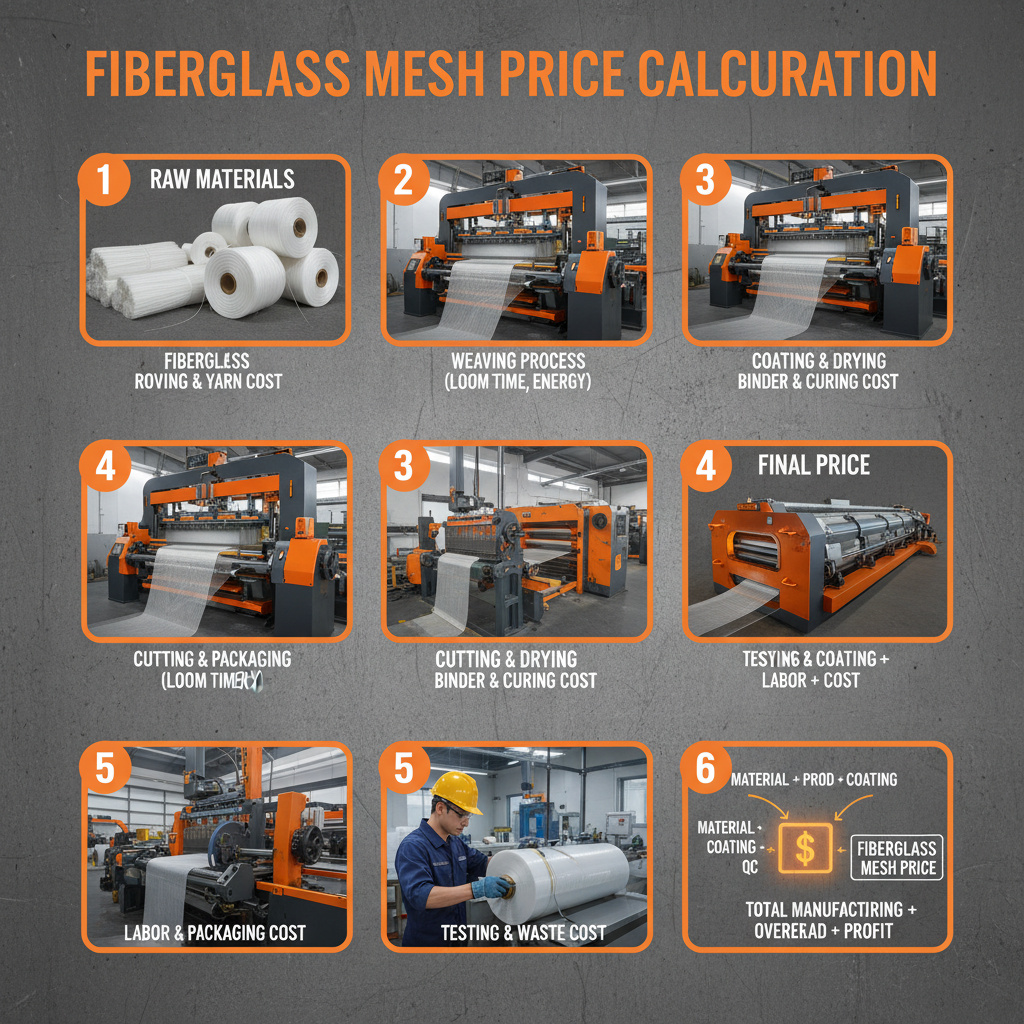
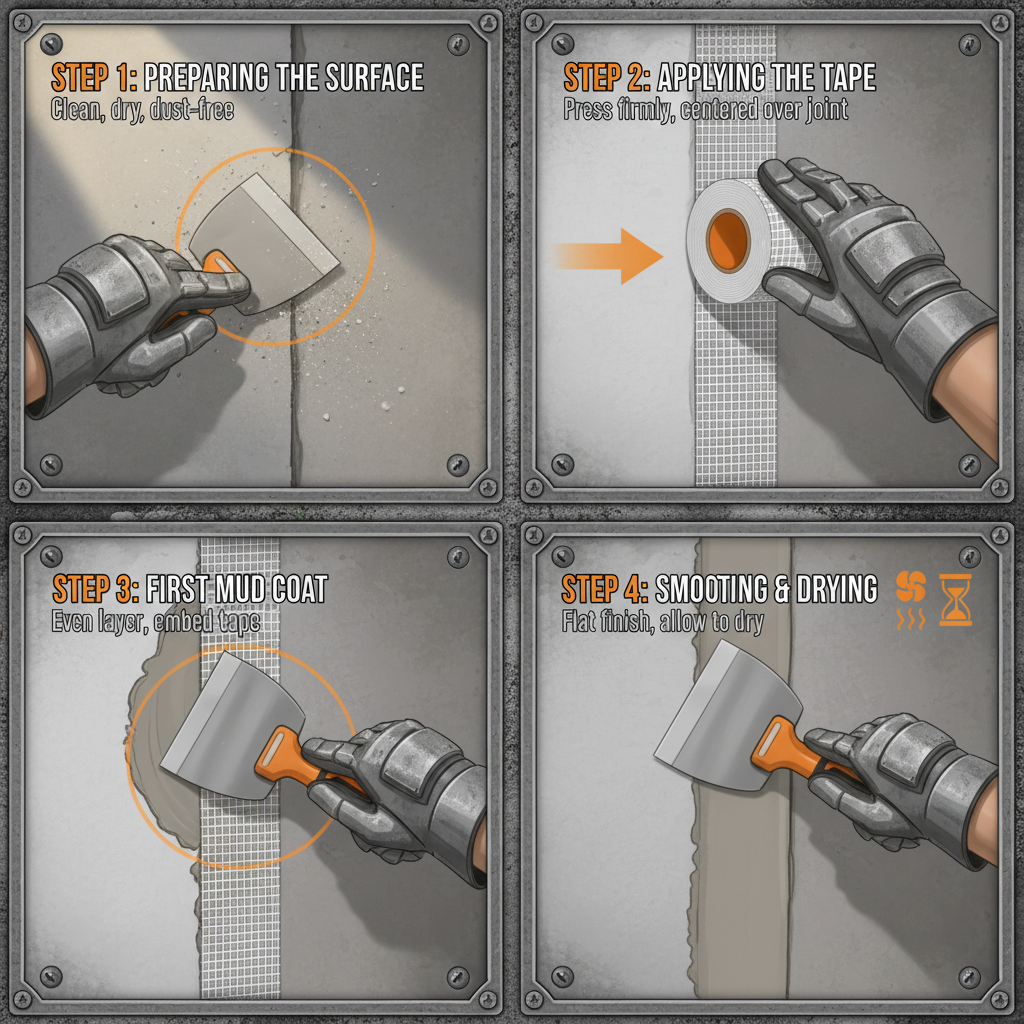
Sourcing factory fiberglass mesh rolls requires a deep understanding of the technical balance between tensile strength and alkali resistance. In the specialized field of non-metallic mineral products, these rolls serve as the critical reinforcement backbone for modern construction, preventing structural cracking in EIFS, GRC panels, and reinforced cement products.
Procurement managers often struggle with inconsistent mesh weights and poor coating quality, which can lead to premature degradation of wall systems. Finding a manufacturer that integrates yarn production with weaving ensures that the chemical treatment—essential for alkali resistance—is applied uniformly across the entire roll.
This guide provides a technical and commercial framework for evaluating factory fiberglass mesh rolls, covering essential specifications, application-specific selections, and a supplier evaluation matrix to optimize your procurement process.

Core Material Composition and Manufacturing

Factory fiberglass mesh rolls are engineered from high-quality C or E glass fiber yarn. The manufacturing process begins with a specialized weaving technique that creates a stable grid, followed by the application of an anti-alkali coating and reinforcing agents. This chemical treatment is critical because cement is naturally alkaline; without this coating, the glass fibers would dissolve, leading to a total loss of structural reinforcement.
The final stage involves high-temperature heat finishing, which cures the coating and ensures the mesh maintains its dimensional stability under extreme weather conditions. Tainuo Fiberglass Mesh Factory utilizes integrated production lines to control this process from yarn extrusion to final roll packaging.
Critical Specifications for Procurement
When ordering from a factory, specifications must be precise to avoid material failure. The weight, typically ranging from 60g to 300g per square meter, determines the tensile strength and the amount of reinforcement provided to the cementitious layer. For standard wall reinforcement, 145g is a common benchmark for balancing strength and workability.
Mesh size (e.g., 4x4mm, 5x5mm) is equally important. A tighter mesh provides more reinforcement points but may affect the flow of the mortar. Buyers should specify the required roll width (commonly 1m) and length (50m or 100m) to optimize shipping volume and on-site cutting waste.
Application-Specific Mesh Selection
Different engineering projects require different mesh properties. For External Thermal Insulation Composite Systems (ETICS) or EPS insulation boards, a high-strength, alkali-resistant mesh is non-negotiable to prevent cracking during thermal expansion. In contrast, when used as a back mesh for granite or marble mosaics, the focus shifts toward adhesive compatibility and dimensional stability.
Specialized applications like GRC wall panels or waterproof membrane fabrics require meshes that can withstand higher impact forces. In these cases, selecting a heavier weight mesh (above 160g) provides the necessary impact resistance and structural integrity for heavy-duty architectural elements.
Evaluating Performance Indicators
Performance evaluation for factory fiberglass mesh rolls is based on relative indices of strength, stability, and resistance. A conceptual analysis shows that as weight increases, tensile strength rises, but the ease of embedding the mesh into thin mortar layers decreases.
The chart illustrates a normalized score (1-10) across different mesh weights. While 300g offers the highest strength, 145g provides the optimal balance for general construction, offering high alkali resistance and excellent workability for large-scale wall installations.
Supplier Manufacturing Capabilities
A reliable factory should possess integrated production capabilities. Tainuo Fiberglass Mesh Factory, for instance, operates a 20,000 square meter facility with dedicated yarn production lines and a 10,000 square meter weaving workshop. This vertical integration allows for tighter quality control and the ability to offer OEM specifications.
Capacity is another key factor. With an annual output of 60 million square meters, a manufacturer can guarantee consistent delivery schedules for large infrastructure projects. Buyers should verify if the factory can handle customized widths and weights to match specific project blueprints.
Common Risks in Bulk Sourcing
The most significant risk in bulk procurement is "weight variance." Some suppliers may provide rolls that meet the weight specification at the center but are thinner at the edges. This leads to uneven reinforcement and potential weak spots in the finished wall. Ensuring a consistent coating of the anti-alkali agent is the second most critical risk; poorly coated mesh will degrade quickly when exposed to wet cement.
Packaging and logistics also play a role. Improperly packed rolls can be crushed or contaminated during sea shipment. Standard industry practice involves individual plastic bagging and reinforced woven bags or cartons to maintain the roll's shape and purity.
Procurement Decision Framework
Choosing the right factory fiberglass mesh rolls depends on the specific environmental exposure and structural load of the project. The following framework compares common mesh types based on their primary application and risk factors.
| Mesh Type | Best Use Case | Key Strength | Main Consideration |
|---|---|---|---|
| Lightweight (60-110g) | Interior Gypsum Board | High Flexibility | Low Tensile Strength |
| Standard (140-160g) | EIFS / External Walls | Balanced Performance | Coating Uniformity |
| Heavy Duty (170-300g) | GRC / Concrete Panels | High Impact Resistance | Mortar Embedding |
| Custom Mesh Size | Specialized Flooring | Precision Fit | Lead Time |
| Self-Adhesive Tape | Joint Reinforcement | Installation Speed | Adhesive Longevity |
| Alkali-Resistant Yarn | Composite Manufacturing | Raw Material Purity | Weaving Tension |
By aligning the mesh weight and coating specifications with the project's structural requirements, procurement officers can reduce material waste and ensure long-term building durability.
Frequently Asked Questions
Many manufacturers, including Tainuo, offer flexible MOQ options. Some welcome small orders starting from 1 piece to allow for project sampling, while bulk pricing is typically applied to full container loads.
Alkali resistance is crucial because cement's high pH level can corrode standard glass fibers. An alkali-resistant coating prevents this chemical reaction, ensuring the mesh retains its strength for the lifetime of the structure.
E-glass is widely used for its excellent electrical insulation and strength, while C-glass is specifically formulated for higher chemical resistance. Most construction mesh uses high-quality E-glass treated with alkali-resistant coatings.
Standard packaging involves wrapping each roll in a plastic bag, followed by grouping rolls into woven bags or sturdy cartons (typically 6-8 rolls per carton) to prevent deformation and moisture ingress during transit.
Yes, professional factories can customize mesh sizes (e.g., 4x4mm, 5x5mm, 6x6mm) and weights to meet specific engineering requirements or regional building codes.
For in-stock items, delivery can often occur within 5 days. For customized production runs, the lead time is generally between 7 to 10 days depending on the order volume.
Conclusion
Selecting the right factory fiberglass mesh rolls is a technical decision that impacts the long-term structural integrity of construction projects. By focusing on the synergy between glass fiber weight, alkali-resistant coating quality, and manufacturing integration, buyers can ensure their reinforcement materials prevent cracking and withstand environmental stressors.
For professionals evaluating implementation options and specific product weights, detailed technical specifications and custom samples can be reviewed at www.tainuofiberglassmesh.com to ensure project compliance.