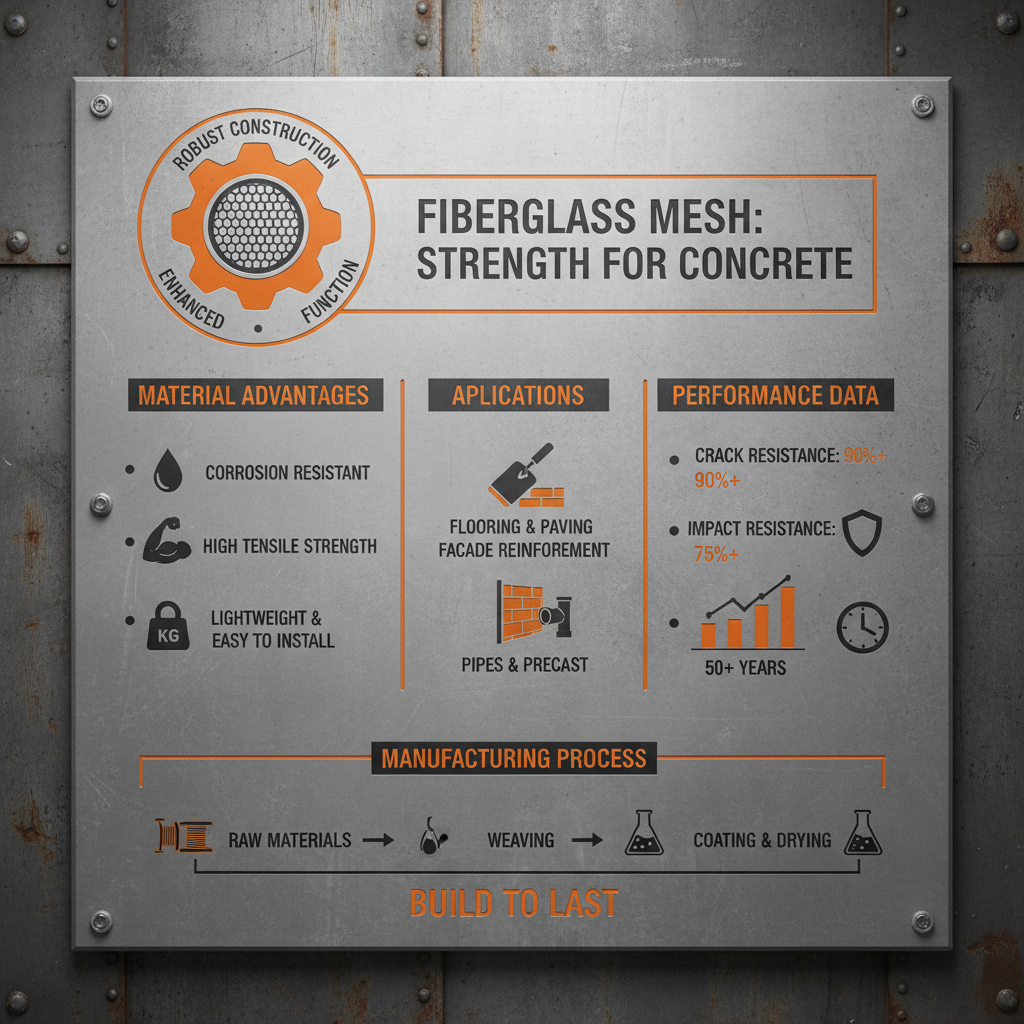
Selecting the right reinforcement material for modern construction often comes down to a balance between material tensile strength and chemical durability. In the European and Asian markets, the procurement of china germany fiberglass mesh has become a focal point for engineers seeking to optimize the lifespan of External Insulation and Finish Systems (EIFS).
The technical challenge lies in the alkaline environment of cement and mortar, which can degrade standard glass fibers over time. This has led to the widespread adoption of alkali-resistant (AR) coatings, typically acrylic latex, which shield the glass filaments from chemical erosion while maintaining structural integrity.
By examining the intersection of high-grade Chinese manufacturing capabilities and rigorous German engineering standards, project managers can better evaluate the specifications required for wall reinforcement, heat preservation, and mosaic stabilization.

The Technical Foundation of AR Mesh

Fiberglass mesh is fundamentally composed of high-strength glass yarn that is woven into a stable grid and then coated with a specialized acrylic latex. This coating is not merely a surface layer but a chemical barrier that prevents the alkali in cement from attacking the glass filaments.
For international projects involving china germany fiberglass mesh, the focus is often on the stability of this bond. If the coating is insufficient, the mesh will lose its tensile strength within weeks of installation, leading to surface cracking and failure of the insulation system.
Material Composition and Design Logic
The choice between C-glass and E-glass determines the inherent chemical resistance of the mesh. C-glass is specifically designed for alkali resistance, while E-glass offers higher mechanical strength. Many premium products utilize a blend or a highly treated E-glass to achieve a balance of strength and durability.
Design logic also extends to the mesh size and weight. Standard dimensions like 4x4mm or 5x5mm are chosen based on the thickness of the render layer. A weight range of 60g/m² to 300g/m² allows engineers to specify a mesh that provides enough reinforcement without creating excessive bulk that could hinder the bonding of the outer plaster.
The weaving process must ensure dimensional stability. Stiffness and smoothness are critical; a mesh that shrinks or deforms during application can cause uneven stress distribution across the wall, compromising the overall impact resistance of the facade.
Determining Performance Stability
Evaluating the quality of a fiberglass mesh requires looking beyond the initial tensile strength. The real metric of success is how much strength the material retains after 28 days of exposure to a simulated alkaline environment.
High-quality AR coatings should allow the mesh to maintain 60% to 80% of its original strength after 28 days of alkaline testing, ensuring long-term structural stability in reinforced cement products.
This stability is achieved through a combination of high-grade yarn—often sourced from specialized glass groups—and precise coating thickness. When the coating is applied uniformly, the resulting mesh exhibits superior resistance to water, acids, and cement erosion, making it suitable for diverse climatic conditions.
Strength Retention Analysis
The efficacy of the reinforcement is measured by the strength retention rate and the elongation property. A retention rate exceeding 90% for the core fibers, combined with an effective chemical barrier, ensures that the mesh does not become brittle over time.
Different mesh weights and coatings respond differently to stress. By analyzing a relative performance index, we can see how different specifications impact the overall durability of the wall system.
Figure 2. Relative Performance Index by Mesh Weight
Practical Application Scenarios
In a typical industrial setting, such as the installation of GRC (Glass Fiber Reinforced Concrete) wall panels or EPS insulation boards, the mesh acts as the primary defense against shrinkage cracks. By embedding the mesh within the base coat, the system gains significant impact resistance, preventing the finish from cracking under thermal expansion or physical stress.
Beyond wall reinforcement, these materials are essential for marble and mosaic backing. The mesh ensures that small tiles remain aligned during installation and prevents them from detaching over time. Additionally, in roofing, the mesh serves as a waterproof membrane fabric, providing a stable substrate for asphalt and bitumen layers.
Evolution of Reinforcement Standards
The industry is shifting toward higher standardization in yarn quality. The integration of specialized fiberglass yarn—offering up to 20% more strength than standard alternatives—allows for thinner mesh that provides equivalent or superior reinforcement.
There is also a growing demand for customization. While white is the standard color, custom colors are increasingly used for identifying different layers in complex construction projects. This shift toward "intelligent specification" means that mesh is no longer a commodity but a tailored component of the building envelope.
Sustainability is also playing a role. The move toward better thermal insulation (via EIFS) requires mesh that can withstand the chemical composition of new, eco-friendly binders without losing its structural role.
Comparative Selection Framework
When choosing between different mesh options, procurement teams must evaluate the trade-off between initial cost and long-term maintenance. A lower-weight mesh may reduce costs initially but can lead to failure in high-stress areas like corners or window perimeters.
The use of Corner Beads with fiberglass mesh is a critical decision for those prioritizing edge durability. Integrating a rigid bead with the mesh prevents the most common failure point in EIFS: the corner crack.
The following framework provides a relative assessment of how different specifications align with specific project requirements, ensuring the chosen material matches the operational environment.
| Application Scenario | Recommended Weight | Key Performance Driver | Relative Suitability |
|---|---|---|---|
| Standard EIFS Walls | 145-160 g/m² | Alkali Resistance | High |
| High-Impact Zones | 240-300 g/m² | Tensile Strength | Essential |
| Mosaic/Marble Backing | 60-90 g/m² | Dimensional Stability | Moderate |
| Lightweight Gypsum | 60-110 g/m² | Flexibility | High |
| GRC Wall Panels | 160-240 g/m² | Chemical Inertness | Essential |
| Asphalt Roofing | 110-160 g/m² | Waterproof Bond | Moderate |
Questions & Answers
Alkali resistance is achieved by treating the fiberglass yarn with a specialized coating, typically acrylic latex, or by using C-glass. Because cement and mortar are highly alkaline, untreated glass fibers would dissolve or weaken rapidly. The coating creates a chemical shield that prevents the hydroxide ions in the cement from penetrating the glass filaments, thereby preserving the mesh's tensile strength over the life of the building.
The weight depends on the expected mechanical load and the thickness of the render. For standard residential EIFS, 145-160g/m² is typically sufficient. However, in commercial areas prone to physical impact or in high-rise structures with significant wind loads, heavier meshes (240g/m² or above) are recommended to prevent cracking. Always align the mesh weight with the local building codes and the specific requirements of the adhesive layer.
Fiberglass mesh usually refers to the wide rolls used for full-surface reinforcement in EIFS or GRC. Fiberglass mesh tape is a narrower strip, often self-adhesive, specifically designed for joint reinforcement in drywall or gypsum board installation. While both use similar glass yarn, the tape is focused on preventing cracks at the seams of boards, whereas the mesh is designed for broad structural reinforcement of a wet-mix surface.
While white is the industry standard and works for most applications, some projects require custom colors for identification or aesthetic reasons. More importantly, the color is less critical than the material grade (C-glass vs E-glass). For specialized applications like mosaic backing or specific industrial coatings, ensure the coating chemistry is compatible with the final surface material regardless of the mesh color.
The yarn is the structural core of the mesh. Higher-grade yarn produced by specialized groups offers better consistency in filament diameter and higher purity, which translates to a 20% increase in strength and a smoother surface. This ensures that when the mesh is woven, there are no weak points that could lead to premature tearing or localized failures under stress.
Prioritize suppliers who can provide strength retention data after 28 days of alkaline exposure. Check for CE certifications and the ability to provide customized specifications (width, mesh size, and weight). A reliable supplier should also have a transparent production process, including the source of their glass yarn and the type of acrylic latex used for the AR coating.
Final Thoughts
The long-term success of a building's exterior depends heavily on the invisible components that provide structural stability. The selection of china germany fiberglass mesh should be treated as a technical decision based on chemical resistance and tensile requirements rather than a simple procurement of a commodity.
By focusing on alkali-resistant coatings and precise material weights, developers can ensure that their reinforcement systems resist the corrosive nature of cement and the physical demands of the environment, ultimately reducing maintenance costs and increasing the safety of the structure.