Structural integrity in modern wall construction depends heavily on the ability to manage stress and prevent cracking at joint intersections. While traditional plastering methods provided basic coverage, the integration of specialized reinforcement materials has shifted the focus toward long-term durability and crack suppression.
The selection of materials for these critical points is no longer just about filler; it is about creating a composite layer that can withstand thermal expansion and seismic shifts. This is where high-performance meshes and tapes become essential for maintaining the aesthetic and structural quality of interior and exterior surfaces.
For procurement managers and construction engineers, identifying reliable fiberglass mesh for wall suppliers requires an understanding of the technical interplay between alkali resistance, tensile strength, and adhesive bonding.

The Evolution of Wall Reinforcement Materials

Historically, wall joints were reinforced using paper tapes or simple plaster layers, which were prone to moisture absorption and subsequent peeling. The transition to fiberglass-based solutions marked a significant shift toward non-organic reinforcement that does not degrade when exposed to the alkaline environment of cement and gypsum.
Today, the industry emphasizes integrated systems. For instance, Renqiu Tainuo Fiberglass Product Co., Ltd has evolved from basic yarn production to sophisticated weaving workshops, enabling the creation of self-adhesive meshes that streamline the installation process for gypsum board joints and exterior insulation finishing systems (EIFS).
Technical Architecture of Fiberglass Mesh Tapes
The effectiveness of a fiberglass mesh tape is determined by its yarn quality and the coating applied to the fibers. High-grade meshes utilize a center creasing process, which allows the tape to fold easily at corners without compromising the structural integrity of the weave. This is particularly critical for corner beads and ceiling joints where precise angles are required.
Self-adhesive varieties are engineered with a specialized buffing process on both sides. This ensures that the bond between the mesh and the substrate is immediate, while the outer surface remains receptive to ready-mix or setting-type joint compounds. The interplay between the adhesive layer and the fiberglass yarn prevents the mesh from shifting during the drying phase of the plaster.
From a material science perspective, the mesh size—typically ranging from 4x4mm to 5x5mm—is optimized to allow joint compounds to penetrate the fabric completely. This creates a mechanical lock between the reinforcement and the wall surface, distributing stress across a wider area and effectively neutralizing the forces that lead to crack formation.
Analyzing Alkali Resistance and Chemical Stability
One of the primary challenges in construction is the high alkalinity of cement-based materials. Standard glass fibers can be eroded by the caustic nature of cement, leading to a loss of tensile strength over time. To counter this, professional-grade fiberglass meshes are treated with alkali-resistant coatings that shield the glass core from chemical attack.
The longevity of a wall reinforcement system is not determined by its initial strength, but by its ability to maintain that strength in an alkaline environment through chemical resistance and resin bonding.
Beyond alkali resistance, modern meshes are designed to be water-resistant and anti-mildew. This makes them suitable for high-humidity environments such as bathrooms or exterior facades. By preventing moisture from compromising the bond, these materials ensure that the reinforcement remains active even under adverse weather conditions or internal leaks.
Performance Indices Across Different Mesh Weights
Mesh weight, measured in grams per square meter (g/m²), is the primary indicator of the material's load-bearing capacity. Lighter meshes (around 60g-90g) are typically used for interior gypsum board joints, where the goal is to conceal seams. Heavier meshes (160g-300g) are reserved for exterior wall reinforcement and waterproofing of roofs, where higher impact resistance is mandatory.
The relationship between weight and performance is not linear. Increasing the weight improves the modulus of elasticity and stability, reducing the likelihood of contraction deformation. However, overly heavy mesh can be more difficult to embed in thin plaster layers, highlighting the need for a precise match between product specification and application requirements.
Figure 2. Suitability Index by Mesh Weight
Practical Application Scenarios and Installation
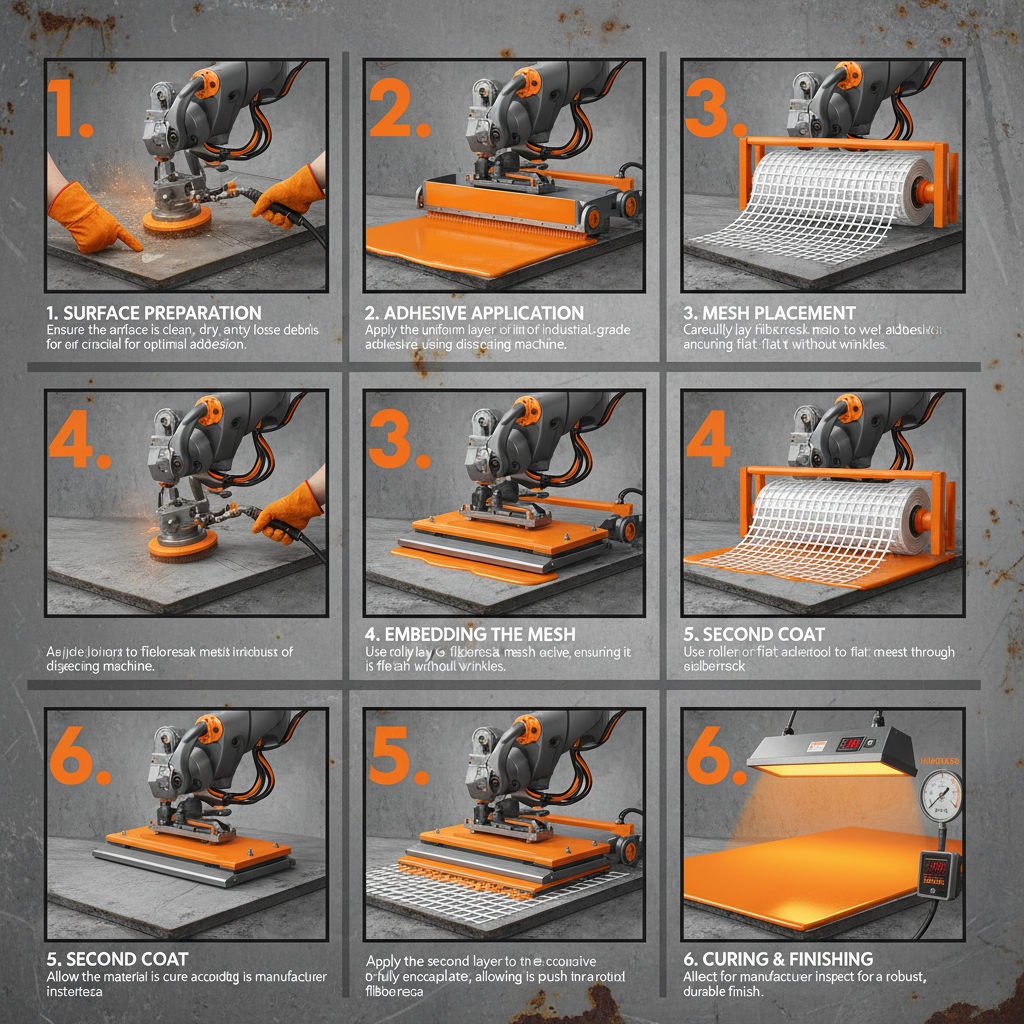
In a typical industrial setting, such as the installation of exterior thermal insulation, fiberglass mesh is embedded within a base coat of cementitious adhesive. This layer prevents the insulation boards from cracking under thermal stress and provides a stable substrate for the final finish. Proper overlap—usually 10cm at the seams—is critical to ensure continuous reinforcement across the entire wall surface.
For interior work, self-adhesive joint tapes are applied directly to the gypsum board seams before the joint compound is smoothed over. The ability of the tape to maintain a flat profile is essential; any bunching or folding can result in visible imperfections after painting. Using a center-creased mesh allows for seamless transitions at internal and external corners, reducing the need for additional corrective sanding.
Current Trends in Sustainable Construction Reinforcement
The construction industry is moving toward materials that offer higher thermal efficiency and lower carbon footprints. Fiberglass mesh contributes to this by enabling the widespread use of External Thermal Insulation Composite Systems (ETICS), which significantly reduce energy consumption in buildings by providing a continuous thermal envelope.
There is also a growing demand for specialized meshes that can be integrated with plastic asphalt or marble mosaics. This versatility allows architects to combine aesthetic luxury with structural stability, ensuring that heavy cladding materials do not pull away from the wall due to gravity or vibration.
Furthermore, the shift toward OEM and ODM production allows companies to tailor mesh specifications—such as custom widths from 4.5cm to 2m—to specific project needs. This reduces material waste on site and ensures that the reinforcement is perfectly sized for the architectural elements, such as specifically designed corner beads.
Selection Framework for Industrial Procurement
Selecting the right material involves balancing tensile strength against ease of application. A common error in procurement is choosing a mesh based solely on price without verifying the alkali-resistance coating quality. Lower-grade products may appear identical but fail within 2-3 years as the cement chemistry erodes the glass fibers.
Buyers should evaluate suppliers based on their production integration. Companies that control the process from fiberglass yarn production to final weaving, like the facilities operated in Hebei Province, typically offer better consistency in mesh size and weight across large-scale orders.
The following framework provides a relative suitability guide for different wall reinforcement needs, helping procurement officers match the product specification to the operational environment.
| Application Scenario | Recommended Weight | Key Requirement | Relative Suitability |
|---|---|---|---|
| Interior Gypsum Joints | 60g - 90g | Adhesion/Flatness | High (Lightweight) |
| Exterior EIFS Base Coat | 145g - 160g | Alkali Resistance | Essential (Standard) |
| Roof Waterproofing | 160g - 300g | Tensile Strength | High (Heavy-duty) |
| Marble/Mosaic Cladding | 160g - 200g | Impact Stability | Moderate to High |
| Corner Bead Reinforcement | Custom Tape | Folding Flexibility | High (Specialized) |
| High-Humidity Zones | 110g - 160g | Anti-mildew Coating | High (Treated) |
Questions & Answers
Self-adhesive mesh features a pressure-sensitive adhesive backing that allows it to be fixed instantly to gypsum board joints, reducing installation time and preventing the mesh from shifting during the application of joint compound. Non-adhesive mesh is typically embedded directly into a wet layer of mortar or cement, making it more suitable for large-scale exterior wall reinforcement or roofing where a wet-bed application is the standard procedure.
Cement and mortar are highly alkaline. Without an alkali-resistant coating, the glass fibers in the mesh would undergo a chemical reaction that causes them to become brittle and eventually disintegrate. This leads to the loss of structural reinforcement, resulting in cracks appearing on the wall surface. Alkali-resistant mesh ensures that the reinforcement remains intact for the entire lifecycle of the building, maintaining the bond between the wall and the finish.
For most EIFS applications, a weight between 145g and 160g per square meter is recommended. This range provides an optimal balance between tensile strength—necessary to prevent cracks from thermal expansion—and ease of embedding in the base coat. If the building is in a high-impact area or subject to extreme weather, moving toward 200g or higher may be necessary to increase stability and impact resistance.
Yes, fiberglass mesh is an ideal material for roof waterproofing reinforcement. It is typically embedded in bituminous membranes or cementitious waterproofing layers. Because of its high modulus and lightweight nature, it provides the necessary stability to prevent the waterproof layer from tearing due to structural movements or thermal cycling, while its water-resistant properties prevent degradation from moisture exposure.
Lead times vary based on stock availability. For items in stock, delivery can often occur within 5 days; for custom production (OEM/ODM), it typically takes 7 to 10 days. While many manufacturers do not enforce a strict minimum order quantity (MOQ), ordering in quantities that align with standard container loading often provides the most competitive pricing and shipping efficiency for international clients.
Standard fiberglass mesh is white, but it can be produced in blue, green, or other colors. In most cases, the color is purely for identification purposes (e.g., distinguishing different layers or specifications on a job site) and does not affect the tensile strength or alkali resistance. However, it is important to ensure that the dye used does not interfere with the bond between the mesh and the joint compound.
Final Thoughts
The transition from basic fillers to engineered fiberglass reinforcement has fundamentally changed how we approach wall durability. By prioritizing technical specifications—specifically alkali resistance and weight-to-application matching—builders can significantly reduce the frequency of surface cracks and structural failures.
Ultimately, the value of partnering with an integrated manufacturer lies in the ability to secure consistent material quality. As construction demands move toward higher efficiency and longevity, the role of high-performance fiberglass mesh will remain central to sustainable and resilient architectural design.
Related Posts