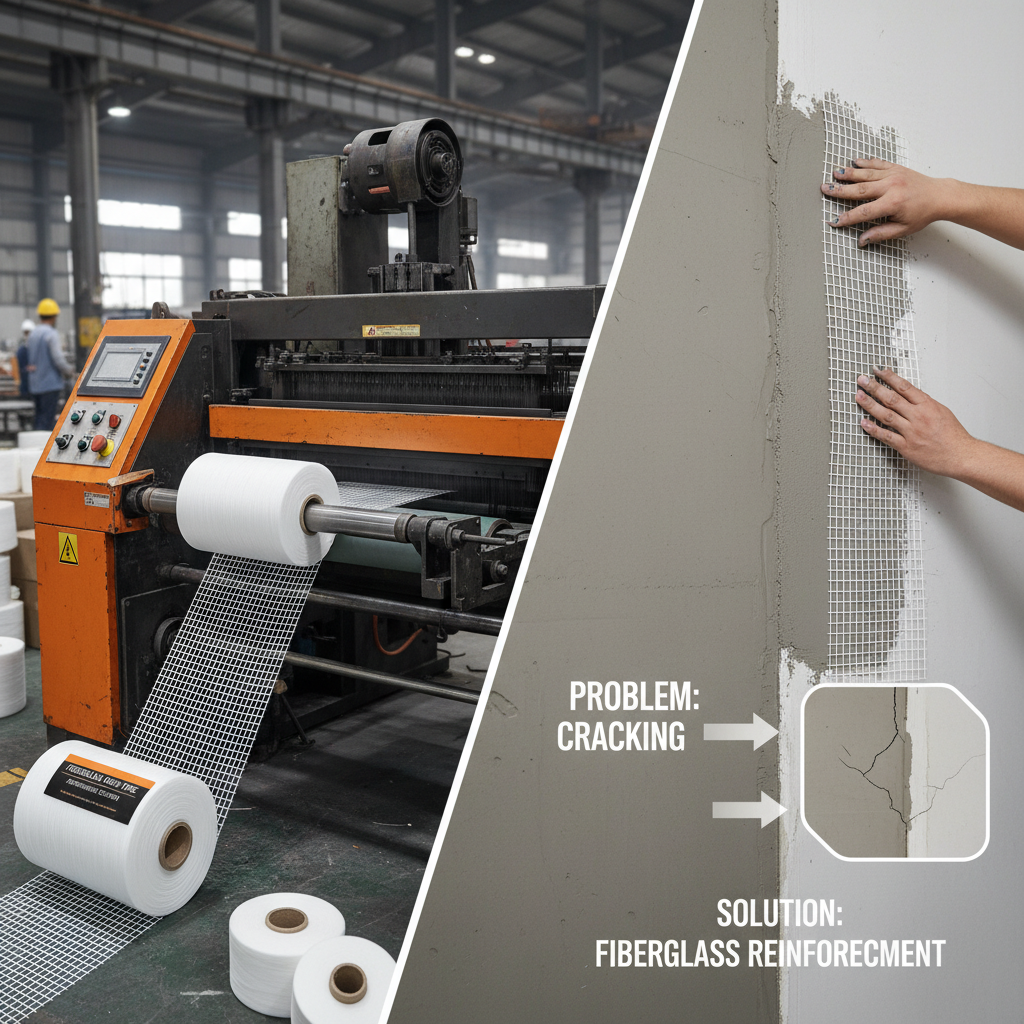
A wall covering fiberglass mesh factory specializes in the production of high-strength alkaline-resistant glass fiber reinforcements designed to prevent cracking and improve the structural integrity of interior and exterior wall systems. These factories employ advanced weaving technologies to create mesh rolls and tapes that serve as the skeletal support for plaster, stucco, and EIFS (Exterior Insulation and Finish Systems), ensuring that wall surfaces remain smooth and durable under varying thermal and mechanical stresses.
In the modern construction industry, the primary challenge for contractors is the inevitable appearance of shrinkage cracks in cementitious coatings. Without a reliable reinforcement layer, temperature fluctuations and building settlement lead to unsightly fissures that compromise both aesthetics and moisture protection. This is where professional-grade fiberglass mesh becomes critical, providing a distributed tensile strength that absorbs stress and locks the wall covering in place.
This comprehensive guide explores the technical specifications, procurement standards, and practical applications of fiberglass mesh products. Whether you are a procurement manager sourcing materials for a large-scale project or an engineer evaluating the performance of corner beads and self-adhesive tapes, this article provides the factual data necessary to optimize your selection process and ensure long-term building stability.

1Technical Fundamentals of Fiberglass Mesh Production

The production of high-quality wall covering fiberglass mesh begins with the extrusion of glass yarn, which is then coated with a specialized alkaline-resistant sizing. This sizing is the most critical technical component, as cement-based mortars are naturally highly alkaline and would otherwise corrode the glass fibers over time. A professional factory ensures that the coating is evenly applied, creating a chemical barrier that maintains the mesh's tensile strength throughout the lifespan of the building.
The weaving process utilizes high-precision looms to maintain consistent aperture sizes, such as the common 4x4mm or 5x5mm openings. This consistency is vital for ensuring that the mortar can fully penetrate the mesh, creating a mechanical bond between the substrate and the finish coat. Any variation in the weave can lead to "voids," which become the primary failure points for wall cracks.
Furthermore, factories like Tainuo Fiberglass Mesh Factory integrate vertical production lines, from yarn production to final weaving, which allows for strict control over the weight (gsm) and strength of the final product. This integrated approach reduces contaminants and ensures that the mesh meets international standards for construction materials.
2Core Product Range and Material Characteristics
A comprehensive product portfolio for wall reinforcement typically includes fiberglass mesh rolls, self-adhesive tapes, and PVC corner beads with integrated mesh wings. Each product is engineered for a specific structural role. Mesh rolls are used for broad surface reinforcement, while self-adhesive tapes are designed for joint reinforcement between drywall sheets to prevent seam failure.
Corner beads with fiberglass mesh wings represent a specialized solution for the most vulnerable parts of a wall. By combining a rigid PVC edge with flexible mesh wings, these products protect corners from physical impact while ensuring the transition between two wall planes is seamlessly reinforced. This prevents the "corner crack" phenomenon common in low-quality constructions.
The material characteristics of these products include waterproof properties, rot resistance, and high flexibility. This allows contractors to easily cut and bend the mesh around complex architectural geometries without compromising the structural integrity of the reinforcement layer.
3Critical Applications in Modern Wall Systems
Fiberglass mesh is indispensable in EIFS (Exterior Insulation and Finish Systems), where it is embedded in the base coat to stabilize the insulation boards. In this application, the mesh acts as a tension-bearing skin that prevents the finish render from peeling or cracking during thermal expansion and contraction of the building envelope.
In interior applications, particularly in high-humidity environments like bathrooms or kitchens, fiberglass mesh is used in conjunction with waterproof membranes. The mesh provides the necessary stability for the tile adhesive, ensuring that the bond between the tile and the wall remains intact even if there is slight structural movement in the building.
Beyond standard walls, these materials are increasingly used in the restoration of old masonry. By applying a layer of fiberglass mesh and a thin-coat render, engineers can stabilize crumbling facades and provide a fresh, durable surface that resists the penetration of wind-driven rain and pollutants.
4Performance Analysis and Quality Benchmarks
The performance of fiberglass mesh is measured primarily by its tensile strength and its ability to resist alkaline environments. High-performance mesh from a specialized factory maintains its structural properties even after prolonged exposure to pH levels typical of wet cement. This is achieved through a high-density polymer coating that encapsulates each individual glass filament.
When comparing standard mesh to professional-grade products, the difference is most evident in the "elongation at break" and the consistency of the weave. Lower-quality mesh often exhibits uneven tension, which can cause the mesh to bunch or wrinkle during installation, creating lumps in the final wall finish.
wall covering fiberglass mesh factory Performance Metrics
From a lifecycle perspective, the use of high-specification mesh significantly reduces the frequency of maintenance. Walls reinforced with professional-grade fiberglass mesh are less likely to require re-plastering or crack filling every 3-5 years, resulting in a lower total cost of ownership for the building owner.
5Procurement Guide: Selecting the Right Mesh Specifications
Choosing the correct mesh requires a balance between weight, aperture size, and the specific requirements of the mortar being used. For heavy-duty exterior applications, a weight of 160gsm is recommended, as it provides the highest tensile capacity. For light interior decorative work, 145gsm is typically sufficient and easier to embed in thin-coat plasters.
Procurement teams should also evaluate the supplier's production capacity. A factory with integrated yarn production and large weaving workshops (such as those exceeding 10,000 square meters) is more likely to offer consistent batch quality and shorter delivery lead times, which is critical for maintaining construction schedules.
Finally, verify the packaging and shipping methods. Fiberglass mesh should be packed in rolls or bundles that prevent crushing or deformation during transit, as damaged edges can lead to installation delays and material waste on the job site.
6Industry Evolution and Sustainable Reinforcements
The fiberglass mesh industry is moving toward more sustainable production methods, including the use of recycled glass cullet and eco-friendly sizing agents. Modern factories are optimizing their energy consumption during the yarn melting process to reduce the carbon footprint per square meter of mesh produced.
Another trend is the development of "smart" mesh—coatings that can provide additional properties, such as enhanced hydrophobic (water-repelling) capabilities or antimicrobial agents for use in hospitals and laboratories. These innovations extend the utility of the mesh from simple reinforcement to active wall protection.
As building codes become stricter regarding energy efficiency and thermal bridging, the role of fiberglass mesh in supporting external insulation (EIFS) continues to grow. The ability to secure thick layers of EPS or XPS insulation with a lightweight, high-strength mesh is essential for achieving modern "Passive House" standards.
7Comparative Analysis: Mesh Types and Use Cases
Not all fiberglass reinforcements are created equal. Depending on the specific area of the building—whether it is a high-traffic corridor corner or a wide exterior facade—the material choice must change to optimize cost and performance.
For instance, self-adhesive mesh is superior for rapid drywall installation because it eliminates the need for separate adhesive application, whereas standard mesh rolls are more economical for large-scale masonry projects where the mesh is embedded directly into wet mortar.
| Product Type | Primary Use Case | Main Strength | Primary Limitation |
|---|---|---|---|
| Fiberglass Mesh Roll | Large Facades | High Coverage Efficiency | Requires Wet Embedding |
| Self-Adhesive Tape | Drywall Joints | Rapid Installation | Higher Cost per Meter |
| PVC Corner Bead | Wall Edges | Impact Protection | Fixed Rigid Geometry |
| Heavy-Weight Mesh | Industrial Walls | Maximum Tensile Strength | Harder to Bend |
| Light-Weight Mesh | Interior Decor | Easy Workability | Lower Load Capacity |
| Alkaline-Resistant Mesh | Cement Plaster | Chemical Longevity | Higher Processing Cost |
In summary, the selection process should begin with an analysis of the environmental stressors the wall will face. For areas with extreme temperature swings, prioritizing higher gsm and certified alkaline resistance is non-negotiable to prevent structural failure over time.
Frequently Asked Questions
Conclusion
Investing in high-quality reinforcement from a professional wall covering fiberglass mesh factory is one of the most cost-effective ways to ensure the long-term durability of any building. By selecting the correct specifications—such as alkaline-resistant coatings, appropriate gsm weights, and specialized corner beads—builders can effectively eliminate the risk of structural cracking and unsightly surface failures.
For procurement professionals and engineers seeking reliable, certified reinforcement solutions that meet international construction standards, reviewing the detailed technical data and available product ranges at www.tainuofiberglassmesh.com can provide the necessary guidance for optimal project outcomes.