Selecting the right partner among various fiberglass mesh net companies is a critical decision for construction and industrial projects. Fiberglass mesh provides essential structural reinforcement, preventing cracks and improving the durability of cementitious coatings and wall systems. This article analyzes the technical and commercial factors that define high-performance mesh production and how to evaluate suppliers based on their actual manufacturing capacity.
In the global B2B market, the difference between standard mesh and professional-grade reinforcement lies in the consistency of the yarn and the precision of the weaving process. Many procurement managers struggle to balance cost with technical longevity, often overlooking critical specifications like GSM (grams per square meter) and alkali resistance. Understanding these variables is key to ensuring that the installed materials do not degrade under environmental stress or chemical exposure within the concrete matrix.
Readers will gain a comprehensive framework for assessing supplier capabilities, from analyzing production line scales to reviewing CE certifications. We will explore the practical applications of reinforced PVC corner beads and adhesive tapes, providing a decision-making guide that moves beyond simple price comparisons to focus on total project lifecycle value and structural integrity.
Evaluating Industrial Fiberglass Mesh Production
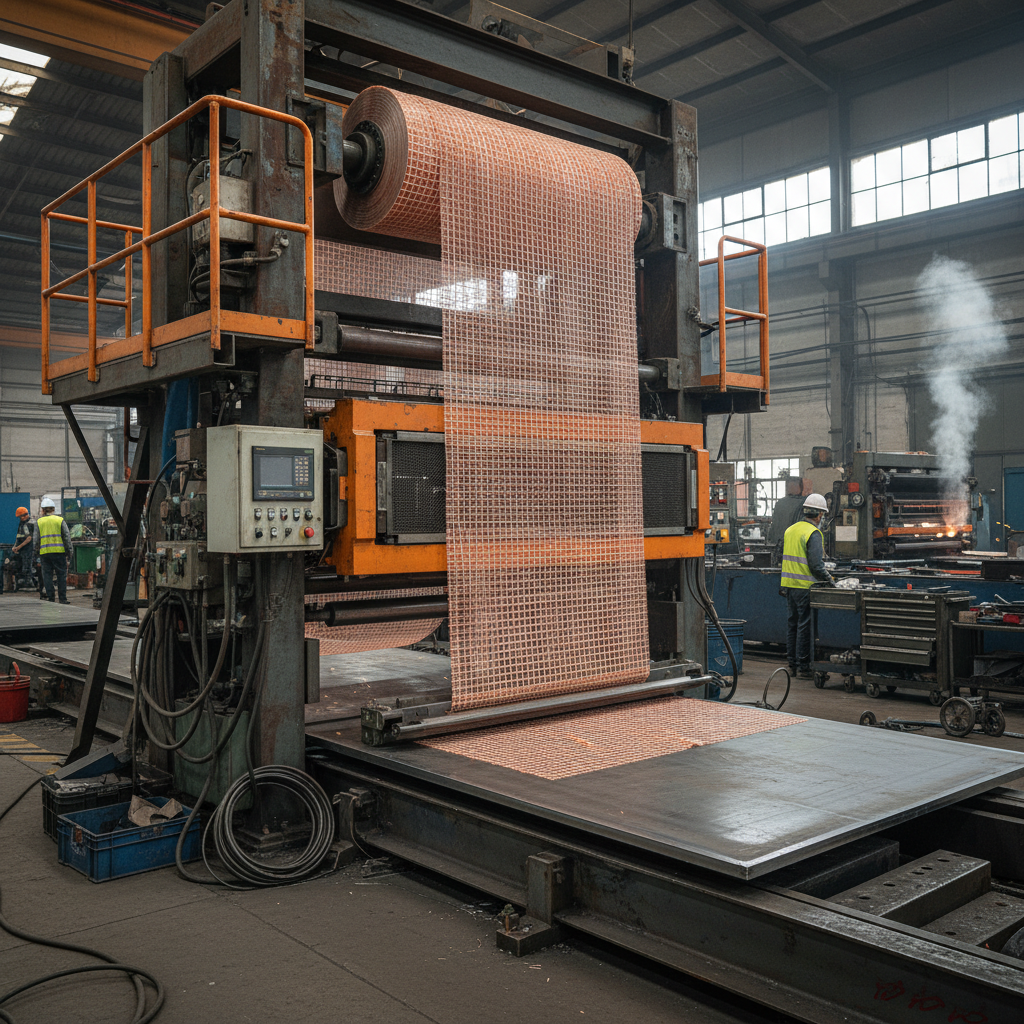
The production of architectural reinforcement mesh is an integrated process that begins with high-quality fiberglass yarn. A professional manufacturing base, such as Tainuo Fiberglass Mesh Factory, integrates research, production, and sales to ensure that the material properties remain stable from the raw fiber to the final roll. With a production area spanning 20,000 square meters and multiple dedicated yarn production lines, the ability to scale output—reaching up to 60 million square meters annually—is a primary indicator of a supplier's reliability. This scale allows for better price stability and consistent quality across large-scale batches.
Beyond sheer volume, the technical sophistication of the weaving workshop determines the mesh's uniformity. Advanced production lines enable precise control over the mesh opening (such as 4x4mm or 5x5mm) and the overall weight, which directly affects the reinforcement's tensile strength. For those researching fiberglass mesh net companies, it is essential to verify if the factory owns its yarn production or merely sources it, as vertical integration typically results in higher quality control and shorter lead times. This structural capability is what differentiates a genuine manufacturer from a trading entity.
Strategic Guide for Sourcing Mesh Solutions
Procuring fiberglass reinforcement requires a detailed understanding of how technical specifications translate into on-site performance. It is not merely about buying a product, but about matching a material's physical properties to the specific stresses of the application environment.
Technical Specification Review
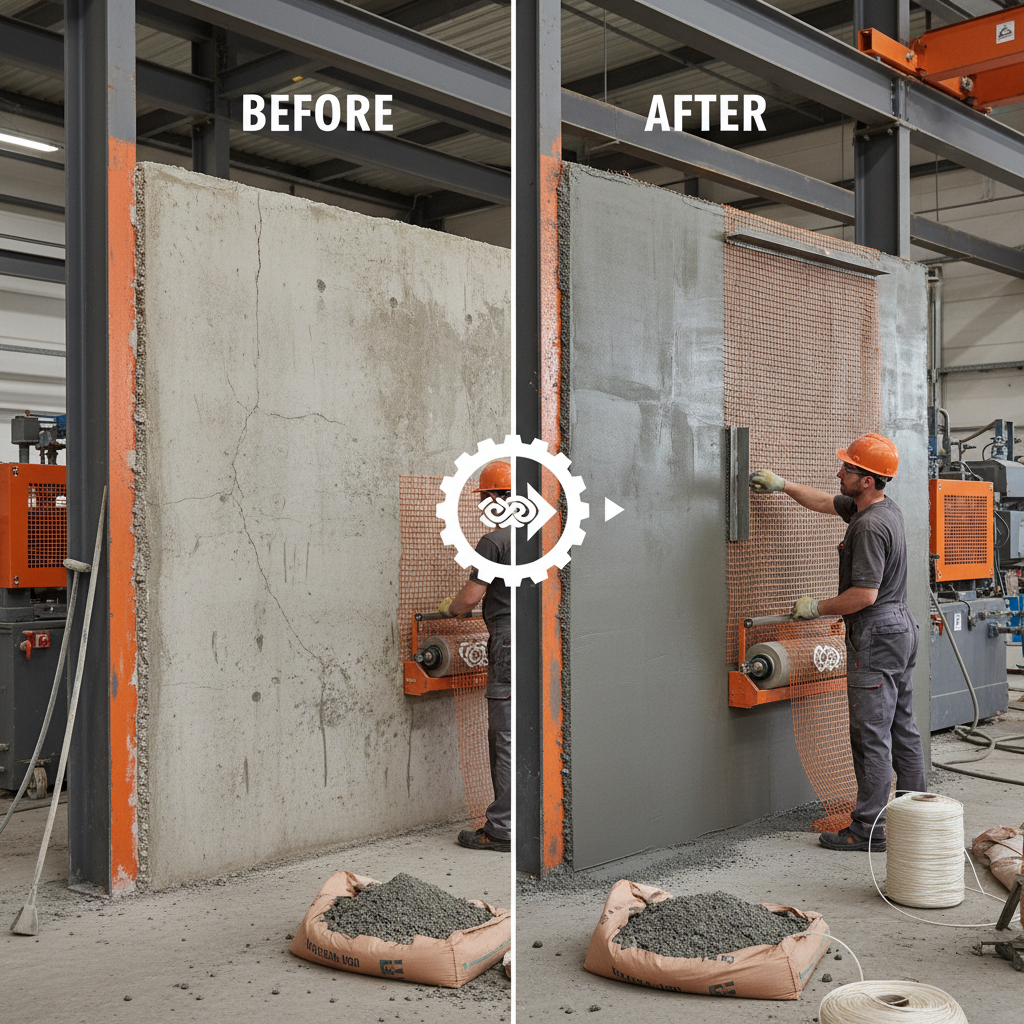
When reviewing specifications, the weight (GSM) is the most critical metric for reinforcement capacity. A mesh with 160gsm offers significantly higher tensile strength than lighter alternatives, making it suitable for heavy-duty exterior wall systems. Additionally, the mesh opening size must be compatible with the thickness of the plaster or mortar being used to ensure proper mechanical bonding.
| Specification Metric | Industrial Standard | Impact on Performance | Buyer Checklist |
|---|---|---|---|
| Mesh Weight (GSM) | 145g - 160g | Higher GSM increases crack resistance | Verify weight consistency per roll |
| Opening Size | 4x4mm / 5x5mm | Affects mortar penetration and bond | Match opening to coating thickness |
| PVC Corner Width | 20mm / 25mm | Determines protection coverage area | Check alignment with wall thickness |
| Material Base | Alkali-resistant Glass | Prevents degradation in concrete | Confirm CE certification for chemistry |
| Roll Length | Customizable | Reduces joint frequency and waste | Request length based on wall height |
| Coating Type | PVC / Self-Adhesive | Determines installation speed | Choose adhesive for dry-walling |
Material Compatibility Analysis
The interaction between the fiberglass mesh and the surrounding PVC or cement compounds is vital. For example, in PVC corner beads, the mesh wings must be securely integrated to provide both reinforcement and thermal insulation. Using environmentally friendly, lightweight raw materials ensures that the profiles do not add unnecessary load to the structure while remaining rot-resistant and waterproof, which is essential for humid or outdoor environments.
Application-Specific Requirements
Different project zones require different mesh configurations. Interior walls may prioritize the ease of installation provided by self-adhesive mesh tapes, whereas exterior facades require rigid PVC corner beads to prevent bumping and impact damage. The ability of a supplier to provide a diverse portfolio—ranging from adhesive tapes to molded corner profiles—indicates their ability to support a complete construction project rather than just a single component.
Quality Certification Standards
For international markets, particularly in Europe, Russia, and the USA, CE certification is a non-negotiable requirement. This certification validates that the fiberglass mesh meets safety and performance standards. When evaluating providers, buyers should request evidence of these certificates to ensure the product will pass local building inspections and comply with regional safety codes.
Customization and OEM Capabilities
Standard sizes often fail to meet the needs of complex architectural designs. High-capacity factories offer OEM and ODM services, allowing clients to specify exact PVC corner lengths (e.g., 2.0m, 2.5m, 3.0m) or specific mesh colors and angles. This flexibility reduces on-site cutting and waste, significantly speeding up the construction process and lowering labor costs.
Supply Chain and Lead Time Factors
In B2B procurement, delivery speed is as important as product quality. A manufacturer with a streamlined process typically offers a delivery window of around 7 days. Buyers should evaluate the supplier's logistical access—such as Tainuo's location in Renqiu City—to ensure that transportation to ports or construction sites is efficient and cost-effective.
Lifecycle Value Assessment
The true cost of fiberglass mesh is not the purchase price, but the cost of potential failure. Using low-grade mesh can lead to wall cracking, requiring expensive repairs. Investing in high-quality, anti-impact, and distortion-resistant PVC corner profiles ensures a longer lifespan for the building's edges, reducing maintenance costs over the decades following construction.
FAQ
What is the primary difference between a manufacturer and a trading company for fiberglass mesh?
A manufacturer, like Tainuo, operates its own yarn production lines and weaving workshops, allowing for direct control over GSM, mesh opening, and quality consistency. Trading companies source from various factories, which can lead to inconsistencies between batches and longer lead times due to the extra layer of communication. Manufacturers also typically offer better OEM/ODM customization for specific lengths and specifications.
How does GSM affect the performance of a fiberglass mesh net?
GSM stands for grams per square meter. A higher GSM (such as 160gsm) indicates a denser weave with more glass fiber per unit area, which results in higher tensile strength and better crack prevention in concrete or plaster. Lower GSM meshes are more flexible and economical but are suited for lighter applications where high structural reinforcement is not the primary requirement.
Can PVC corner beads with fiberglass mesh be used for outdoor applications?
Yes, they are specifically designed for both indoor and outdoor use. The PVC material is waterproof and rot-resistant, while the fiberglass mesh provides the necessary reinforcement. This combination protects exterior wall corners from impact and weather-related distortion, making them ideal for building facades and outdoor perimeter walls.
What should I check when requesting a sample of fiberglass mesh?
When evaluating a sample, check the uniformity of the weave for any gaps or loose threads, verify the mesh opening size against your technical drawings, and test the flexibility of the PVC components if applicable. You should also confirm that the sample's weight matches the quoted GSM. Most professional factories provide samples for free, though freight costs are typically handled by the buyer.
What are the common delivery times for bulk B2B orders of mesh rolls?
While delivery times vary based on order volume and customization requirements, a standard industry lead time for manufacturers with integrated production is approximately 7 days. This efficiency is usually achieved through large-scale weaving workshops and a stable supply of internal fiberglass yarn.
Are there environmentally friendly options for fiberglass mesh reinforcements?
Yes, many modern manufacturers use environmentally friendly raw materials in their PVC and fiberglass production. These materials are designed to be lightweight and economical without sacrificing the anti-impact or rot-resistance properties. Checking for CE certification often ensures that the materials meet environmental and safety standards required for sustainable building practices.
References and further reading
- Fiberglass Mesh Technical Standards - Wikipedia: https://en.wikipedia.org/wiki/Fiberglass_mesh
- European Standard EN 13985-1 for External Thermal Insulation Composite Systems
- ASTM International Standards for Glass Fiber Reinforced Polymers in Construction
Related Articles