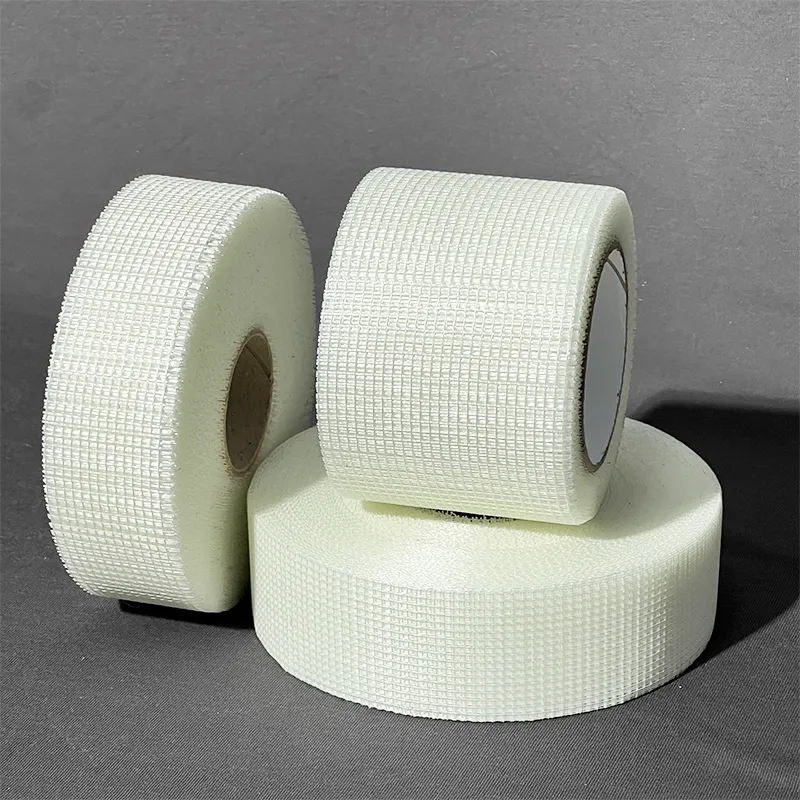
Premium Self Adhesive Fiberglass Mesh for Wall Factories
Dealing with drywall cracks and joint instability requires a reinforcement solution that balances adhesive strength with structural durability. Self-adhesive fiberglass mesh joint tape is specifically engineered to bridge the gap between raw plasterboard and a flawless finish, preventing the common occurrence of stress cracks in internal and external wall systems. By utilizing a woven fabric of C-glass or E-glass coated with a specialized acrylic acid copolymer, this material provides a high-tensile skeleton that stabilizes wall surfaces during the curing process.
For professional contractors and wall factories, the priority is reducing labor time and ensuring long-term reliability. The integration of a self-viscous adhesive layer eliminates the need for pre-bottom coating, allowing for immediate application to clean surfaces. Whether utilized in External Insulation and Finish Systems (EIFS) or simple interior repairs, this mesh ensures that the joint remains intact despite thermal expansion or structural settling, making it an essential component for modern construction standards.

Technical Composition and Structural Advantages of Adhesive Mesh
The performance of joint tape is rooted in its material science. The core consists of high-quality fiberglass yarn, available in various weights from 45g to 160g/m², which provides the necessary tensile strength to resist deformation. Unlike paper tapes, the woven mesh allows joint compound to pass through the fabric, creating a mechanical bond between the tape and the wall substrate. This "interlocking" effect is what prevents the tape from peeling or bubbling over time.
To ensure longevity in alkaline environments—such as fresh cement or plaster—the fibers are treated for alkali resistance. This prevents the glass fibers from degrading when in contact with high-pH materials. The addition of the acrylic acid copolymer liquid coating ensures that the adhesive remains stable and tacky, providing a quick-grip application that holds the tape firmly in place, even on vertical surfaces, without slipping before the plaster is applied.
- High Tensile Strength: Prevents joint separation under structural stress.
- Alkali Resistance: Maintains integrity when embedded in cementitious materials.
- Breathable Structure: Allows for better adhesion of joint fillers and paints.
- Deformation Resistance: Minimizes the risk of surface ripples and foaming.

Practical Application Logic for Wall Reinforcement and Repair
Implementing fiberglass mesh effectively requires a systematic approach to ensure the seal is airtight and structural. The process begins with surface preparation; the wall must be clean, dry, and free of dust to ensure the self-adhesive layer bonds correctly. Once the tape is pressed into the crack or joint, the physical compression ensures that the adhesive creates a primary bond, which is then reinforced by the secondary bond of the plaster.
In advanced scenarios like EIFS (External Insulation and Finish Systems), the mesh acts as a critical reinforcement layer that prevents the outer render from cracking due to temperature fluctuations. For interior drywall repair, the mesh is applied over the joint, covered with joint compound, and then sanded smooth. This sequence transforms a potential point of failure into the strongest part of the wall, ensuring that subsequent paint layers do not reveal any seam lines or hairline fractures.
The versatility of the product is further enhanced by customizable widths and mesh sizes (such as 8x8 or 9x9), allowing engineers to match the mesh density to the specific load requirements of the project. For heavy-duty industrial walls, a higher weight mesh is recommended, whereas residential drywall typically utilizes a standard weight for a smoother finish.
Procurement Considerations for Industrial Wall Reinforcement
When sourcing fiberglass mesh for wall factories, procurement managers must look beyond the price per roll and evaluate the consistency of the adhesive and the quality of the glass yarn. A common failure in low-grade mesh is "adhesive bleed" or insufficient tack, which leads to tape sagging during application. Ensuring the supplier utilizes a consistent coating process for the acrylic copolymer is key to maintaining productivity on the job site.
Customization is another critical factor. Depending on the scale of the project, standard 90m rolls may be insufficient, or specific widths (5cm or custom) may be required to minimize waste. Furthermore, the choice of color—while typically white—can be adjusted to match specific primers or substrates. Working with a manufacturer that offers OEM and ODM services allows for the precise alignment of product specifications with the architectural requirements of the project.
Quality assurance should be verified through international standards, such as CE certification, which guarantees that the material meets safety and performance benchmarks for construction use across global markets including Europe, the USA, and Southeast Asia.
Technical Specifications and Selection Matrix
| Specification Item | Standard Range | Application Suitability | Performance Impact |
|---|---|---|---|
| Material Base | C-Glass / E-Glass | General Construction | Determines alkali resistance |
| Weight (gsm) | 45g - 160g/m² | Light to Heavy Duty | Influences tensile strength |
| Adhesive Type | Acrylic Copolymer | Drywall & EIFS | Affects initial tack & bond |
| Mesh Size | 8x8, 9x9, Custom | Joints & Stone Reinforcement | Determines compound penetration |
| Standard Length | 90m / Customized | Industrial Scaling | Affects project waste ratio |
Manufacturing Excellence and Quality Control Framework
Tainuo Fiberglass Mesh Factory leverages over two decades of expertise to maintain a rigorous production standard. With an integrated approach covering research, production, and sales, the facility operates four dedicated fiberglass yarn production lines and a 10,000 square meter weaving workshop. This vertical integration ensures that the quality of the raw yarn—the most critical component—is controlled before it even reaches the weaving stage.
The production process employs advanced weaving technology to ensure uniform mesh apertures and consistent tension across the entire roll. Following the weaving, the coating process for the self-adhesive layer is strictly monitored for thickness and viscosity. This prevents common defects such as uneven adhesive distribution, which can cause "bubbles" in the final wall finish. Every batch is tested against international standards to ensure that the tensile strength and alkali resistance meet the demanding requirements of the global export market.
By maintaining a large-scale production base in North China, the factory is capable of an annual output of 60 million square meters, providing the stability and volume necessary for large-scale infrastructure projects while remaining flexible enough to handle customized OEM orders for niche specifications.
Future Trends in Wall Reinforcement Technology
The construction industry is moving toward "faster-build" methodologies, increasing the demand for products that reduce installation steps. The shift from traditional paper-based joint tapes to self-adhesive fiberglass mesh is a primary example of this trend. Future developments are focusing on enhancing the chemical bonding between the acrylic adhesive and new eco-friendly, low-VOC plasters, ensuring that sustainability does not come at the cost of structural integrity.
Additionally, there is a growing trend toward higher-density meshes for use in stone reinforcement and waterproof roofing. As buildings become more complex, the role of the mesh is expanding from simple crack prevention to providing active structural support for composite cladding systems. The ability to customize mesh weight and aperture size will become increasingly important as architects experiment with new hybrid wall materials.
For buyers, the focus will shift toward total lifecycle value—selecting materials that not only install quickly but also eliminate the need for costly repairs five to ten years down the line. This makes the selection of high-alkali-resistant, high-tensile mesh a strategic decision rather than a mere commodity purchase.
Frequently Asked Questions About Fiberglass Joint Tape
Can we request OEM or ODM services for specific mesh dimensions?
Yes, we provide comprehensive OEM and ODM services. We can customize the width, length, weight, and mesh size according to your specific project requirements, including free design assistance to ensure the product fits your application.
Is it possible to obtain samples before placing a bulk order?
Absolutely. Small rolls or A4 sheet samples are provided free of charge. The customer is only responsible for the freight costs associated with shipping the samples.
What is the standard delivery timeframe for regular products?
For regular products and standard packaging, orders are typically dispatched within 7 to 10 days. Custom orders may vary based on the complexity of the specifications.
What is the minimum order quantity (MOQ) for these products?
For regular sizes, there is no strict MOQ. For customized products, we will calculate the MOQ based on the specific production requirements of your order.
How should the tape be applied to ensure maximum adhesion?
Ensure the wall is clean and dry. Attach the tape directly into the crack and compress it firmly. Once the gap is covered, trim any excess with a knife and apply plaster over the mesh. Let it dry naturally before gently polishing and painting.
Why is alkali resistance important for fiberglass mesh?
Cement and plaster are naturally alkaline. Without alkali-resistant treatment, glass fibers would chemically break down, leading to the failure of the reinforcement and the reappearance of cracks in the wall.
Technical References and Industry Resources
- ASTM International - Standards for Fiberglass Reinforcement
- ISO Standards for Construction Materials
- European Concrete Certification Standards
- NIST Building and Fire Research Division
Choosing the right reinforcement material is the difference between a wall that lasts a decade and one that requires constant maintenance. By prioritizing tensile strength and adhesive reliability, you ensure a professional finish and structural longevity.
Related Industry Insights